Behind the Strength of HK Stocks: Opportunities and Caution Coexist
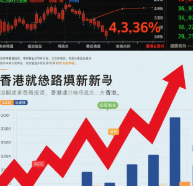
Recently, the HK stock market has become the focus of global capital markets. After a sustained climb, the Hang Seng Index once hit a multi-year high, but yesterday, hit by a sharp overnight drop in US stocks, HK stocks pulled back sharply, closing down 3.36%. Despite the single-day volatility, looking at the overall trend, HK stocks have performed strongly since the beginning of the year, significantly outperforming the repeated tug-of-war of A-shares around the 3,000-point level. At the capital level, a large number of HK-related funds have received net subscriptions, showing investors' high enthusiasm for HK stock allocation. However, as valuations rise, market divergence gradually emerges: some fund companies are still optimistic about the long-term trend of HK and A-share valuation convergence, but some QDII fund managers have explicitly warned that 'valuations are no longer cheap' and suggest caution in deployment. This article analyzes the driving factors and potential risks of this HK stock rally from dimensions including capital flow, valuation comparison, and institutional views.
I. Capital Logic Behind HK Stock Strength
This round of HK stock rally is not an isolated event. Against the multiple resonances of global liquidity easing expectations, enhanced signals of China's economic recovery, and HK stocks' own low-valuation appeal, southbound funds and overseas funds have simultaneously poured in. Data shows that net buying size of southbound funds has remained at high levels in the past month, with significant growth in shares of many HK stock ETFs. Investors' allocation logic for HK stocks is mainly based on two points: first, HK stocks still have a clear valuation discount compared to A-shares, especially in sectors like finance, real estate, and internet; second, the HK stock market gathers many high-quality Chinese tech companies that have global competitiveness in tracks such as AI, e-commerce, and cloud computing.
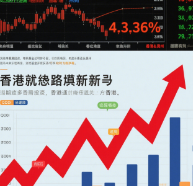
The chart above shows the recent daily K-line trend of the Hang Seng Index. It can be clearly seen that after the initial rapid rise, short-term technical pullback pressure has increased. But from a medium- to long-term trend line, the structure of bottom elevation is still intact.
Another important driver of fund grabbing is strategic position adjustments by institutional investors. Some global asset management companies believe that Chinese assets are generally undervalued, and HK stocks, as an offshore market, have greater valuation flexibility. Especially against the backdrop of phased easing in US-China relations and a stable RMB exchange rate, HK stocks have become the preferred choice for foreign capital returning. However, the short-term concentrated influx of large funds also brings higher volatility risk; yesterday's big drop is a concentrated reflection of this fragility.
II. Valuation Differences and Convergence Trend
The valuation difference between HK stocks and A-shares is a long-standing structural feature. Taking the Hang Seng Index and the CSI 300 Index as examples, before this round of rise, the Hang Seng Index PE was about 9 times, while the CSI 300 PE was about 12 times, a discount of over 20%. Even after the recent rise, overall HK stock valuations are still lower than A-shares and major global markets. This discount mainly comes from the institutional-dominant investor structure (lower risk appetite), liquidity discount, and regulatory uncertainty in some industries in the HK stock market.
However, it should be noted that the convergence of valuation differences is not a linear process. Historically, the valuation gap between HK stocks and A-shares has often been healed in two ways: either HK stocks rise sharply, or A-shares fall or stagnate. At present, HK stock valuation repair has been relatively sufficient, with some sectors like internet having recovered to above historical medians. Therefore, subsequent convergence is more likely to occur through relative strength in A-shares or HK stock consolidation digestion.
From an industry perspective, sectors with extremely low valuations in HK stocks (such as banks, insurance) still have safety margins, while previously leading tech and consumer sectors need verification of earnings growth. If listed companies' Q1 results disappoint, overvalued individual stocks may face greater pullback pressure.
III. Divergence in Institutional Views: Optimism and Caution Coexist
At the current level, there is clear divergence within fund companies. Some public fund institutions believe that HK stocks are still in the early stage of valuation repair, and the global fund reallocation trend remains unchanged, suggesting moderate overweight in HK stocks. They emphasize that with the continued recovery of the mainland economy, HK stock corporate earnings are expected to improve, thus supporting further valuation increases. In addition, institutional dividends such as the deepening of the Stock Connect mechanism and ETF cross-border connect expansion will continue to attract capital inflows.
However, some more cautious fund managers have already issued warnings. A QDII fund manager at a large fund company explicitly stated in a recent roadshow: "HK stock valuations are no longer cheap, especially the Hang Seng Tech Index; many leading stocks' PE have returned to above 20 times. To continue rising, stronger earnings growth is needed. Investors should not blindly chase highs, but select individual stocks and wait for pullback allocation opportunities." This view echoes recent reports by overseas investment banks such as Morgan Stanley and Goldman Sachs, which have warned of short-term overheating risk in HK stocks.
From historical experience, HK stocks are extremely sensitive to overseas liquidity. If the Fed delays rate cuts or geopolitical risks escalate, HK stocks may face dual pressures of capital outflows and valuation compression. Therefore, the current stage tests investors' timing and stock selection abilities more.
IV. Investment Strategy Recommendations: Rational Layout, Focus on Structural Opportunities
Combining multiple perspectives, for ordinary investors, HK stock investment should grasp the following principles:
First, control positions and avoid chasing highs. It is recommended to limit the allocation proportion of HK stocks to within 20%-30% of personal investment portfolio, and form effective hedging with A-shares and other assets. In the short term, the market is likely to enter a consolidation period; you can wait for the index to pull back to key support levels before gradually adding positions.
Second, focus on high dividends and earnings certainty. In an environment where valuations are not cheap, safety margin is particularly important. You can focus on HK stock sectors with high and stable dividend yields, such as utilities, central enterprises and state-owned enterprises, as well as large tech companies with core competitiveness and earnings delivery capability.
Third, use Stock Connect and QDII funds to diversify risk. For investors who do not have direct HK stock trading conditions, choosing HK stock thematic funds or ETFs with larger scale, stable historical performance, and experienced fund managers is a good way to achieve diversified allocation. Pay attention to the fund's holding structure and avoid over-concentration in a single industry.
Fourth, closely monitor macro economy and policy dynamics. HK stocks are greatly affected by global liquidity; track Fed monetary policy, US-China relations, and mainland economic data. If unexpected negative events occur, reduce positions in time.
Conclusion
This round of HK stock market is the result of the joint effect of valuation repair, fund inflow, and policy expectations. Although short-term pullbacks are inevitable, from a medium- to long-term perspective, the valuation trough of HK stocks relative to A-shares still exists, and the investment value of some quality companies is undeniable. However, with the index returning to near previous highs, the risk-reward ratio is not as favorable as a few months ago. Investors should remain clear-headed in optimism, rationally assess their own risk tolerance, and avoid assuming unnecessary losses by chasing short-term gains. As a veteran fund manager said: 'When investing in HK stocks, you need to see both the direction of the tide and beware of the naked swimmers when the tide goes out.' In the long process of valuation difference convergence, steadiness and rationality are the fundamental ways to navigate volatility.