Helens Trademark Invalid Storm: Why the HK 'Youth' Logic Stalls?
Keywords: HK Stocks, Helens, Trademark Invalid, Brand Competition, Youth, Valuation Adjustment, Consumer Sector
Introduction
The HK consumer sector has always been good at telling 'youth stories,' but whether a story can be realized ultimately depends on brand, product, and cash flow. Recently, Helens attracted widespread market attention after its trademark was ruled invalid, putting pressure on its stock price and market cap. For a company positioned around 'youth social spaces,' this is not just legal uncertainty but a concentrated test of its business model, brand moat, and capital market expectations.
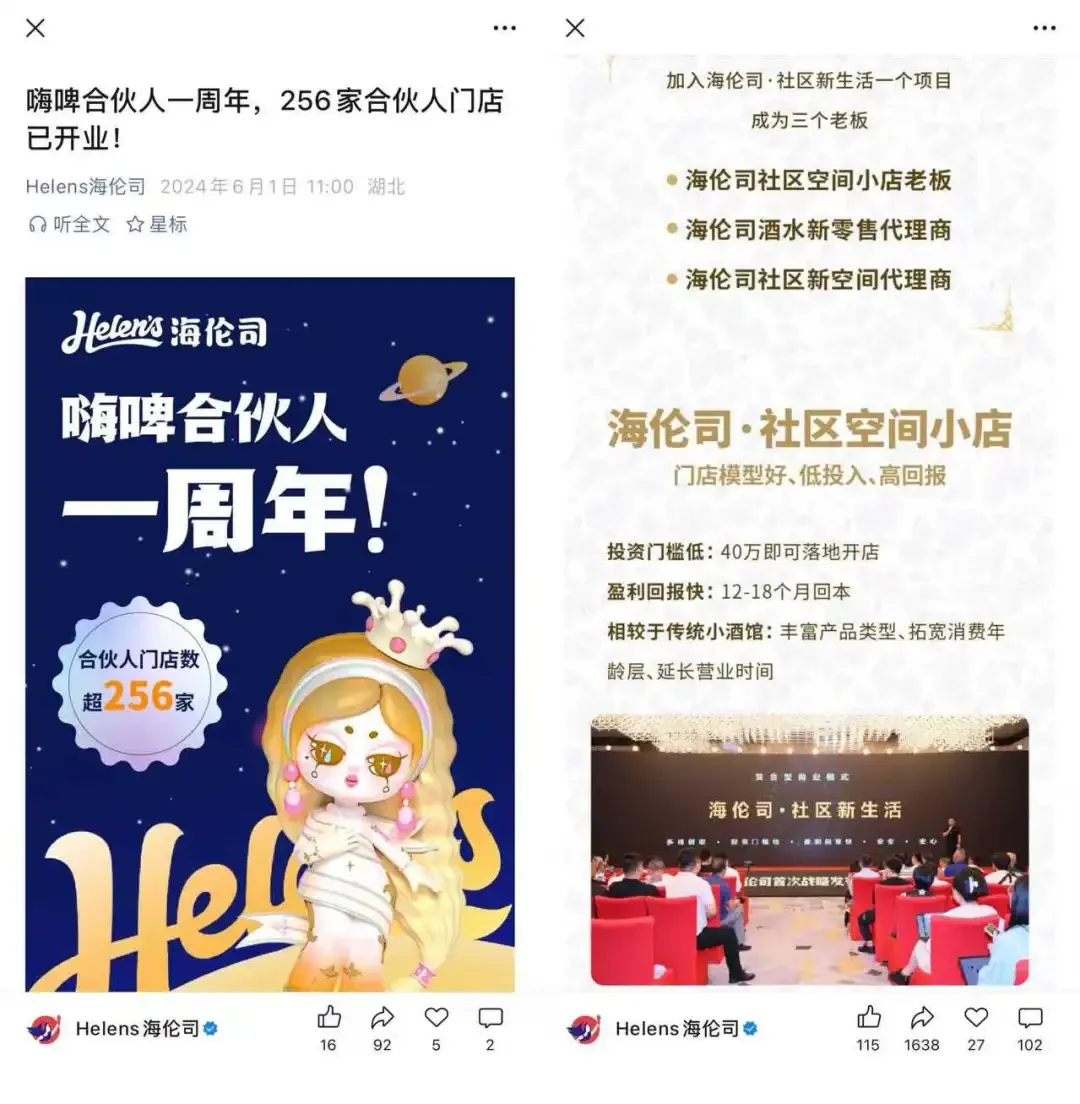
Behind the Trademark Dispute: Brand Assets Are More Fragile Than Imagined
In the valuation system of consumer companies, brand often means premium, especially in the HK market where companies with distinct labels attract capital easily. Helens initially stood out by relying on low-priced alcoholic beverages, social scenes, and 'offline third spaces for youth,' building strong brand recognition.
However, the impact of trademark invalidity is that a brand is not a slogan but a legally protected intangible asset. Once core identifiers become uncertain, the company faces not only practical issues like hindered market communication and store image adjustments but also potential impacts on franchising, licensing, and long-term brand extension. For capital markets, such risks quickly translate into valuation discounts as investors worry about whether the 'brand assets' driving growth are truly solid.
Market Cap Decline Is Not a Single Event but a Concentrated Reflection of a Long-Term Predicament
Helens' market cap pressure is not solely due to a court ruling; the deeper reason is that its growth logic faces phased challenges. In the past, Helens quickly expanded using 'high cost-effectiveness + gathering atmosphere,' tapping into young consumers' demand for social and emotional value. But as market conditions change, the marginal effect of a single model weakens, and industry competition intensifies.
On one hand, the entry barrier for low-priced alcoholic beverages is low; regional pubs, chain restaurants, and new-style tea brands compete for young consumers' attention. On the other hand, young people's consumption habits are more fragmented—they are willing to pay for social experiences but not long-term premiums for homogenized experiences. In other words, Helens' once-successful 'traffic-driven approach' now faces a 'retention' test.
The Core of a Youth Strategy Is Not Catering But Restructuring
The HK market was once enthusiastic about the 'youth' concept, but companies that truly survive cycles are those that continuously restructure consumption value rather than simply catering to young people. Helens' problem is that its brand expression is very distinct, but the differentiation advantages of products and scenes are not always simultaneously strengthened. Young consumers seek novelty and are more likely to switch; if a company only works on store decoration, marketing copy, and social media tactics without building barriers in product structure, supply chain efficiency, and service experience, then 'youth' may become a fading shell.
In this context, the trademark invalidity dispute is magnified by the market because it touches the fundamental question: what does the company rely on to retain users? If brand recognition declines and experience homogenization rises, the capital market will naturally reassess its growth potential.
The Valuation Logic of HK Consumer Stocks Is Returning to Rationality
Helens' case also reflects changes in the valuation system of the HK consumer sector. In the past, the market valued stories and growth elasticity; now, investors increasingly focus on profitability quality, store efficiency, repeat purchase ability, and brand stability. For consumer companies, simply pursuing store expansion speed, revenue scale, or topic heat is no longer enough to support long-term valuations.
Especially in the HK environment, liquidity and risk appetite change quickly; once legal disputes, operational fluctuations, or brand controversies arise, stock prices often react first. In other words, the capital market does not reject the 'youth' track but requires companies to prove they can not only attract youth but also survive consumption cycles.
Conclusion
The Helens trademark invalidity incident appears as a legal dispute on the surface but essentially reveals deep-seated problems commonly faced by HK consumer companies: whether brand assets are solid, whether the business model is replicable, and whether the youth narrative has long-term vitality. For Helens, the real challenge is not short-term market cap fluctuations but re-establishing balance among brand protection, product innovation, and operational efficiency.
For HK investors, this case once again shows that the investment logic for consumer stocks has shifted from 'watching stories' to 'watching delivery.' Only when brand, business model, and performance growth form a closed loop will the so-called youth orientation not become a slogan, and the market cap will have a more solid foundation.