6G Moves from Concept to Deployment, Satellite Internet Cost Reduction Becomes New Focus: Structural Opportunities in HK-listed Related Sectors
Keywords: HK-listed, 6G, Satellite Internet, Communication Equipment, Operators, Tech Growth, Structural Opportunity
Introduction
Against the backdrop of accelerating global tech competition and ever-faster industrial upgrading, the Hong Kong stock market is welcoming a new wave of thematic and fundamental resonance. Recently, discussions around 6G, satellite internet, low-orbit constellations, and communication infrastructure have been heating up. The market focus is gradually shifting from "concept narrative" to "engineering landing" and "cost optimization." Especially in the signals released by industry exhibitions like MWC Shanghai, it can be clearly seen that 6G is no longer a distant technology blueprint but is moving from standard research and scenario verification to industry preparation. At the same time, cost reduction of satellite internet is becoming a key variable in whether large-scale commercialization is possible.
For Hong Kong stock investors, this round of industry trends is not purely thematic rotation but may bring medium-to-long-term value revaluation for communication equipment, operators, cloud infrastructure, and related hard-tech companies. The valuations of Hong Kong stocks are still relatively attractive compared with similar global tech assets. If subsequent industry capital expenditure recovers, policy support strengthens, and commercialization progress accelerates, related sectors are likely to see clearer catalysts.
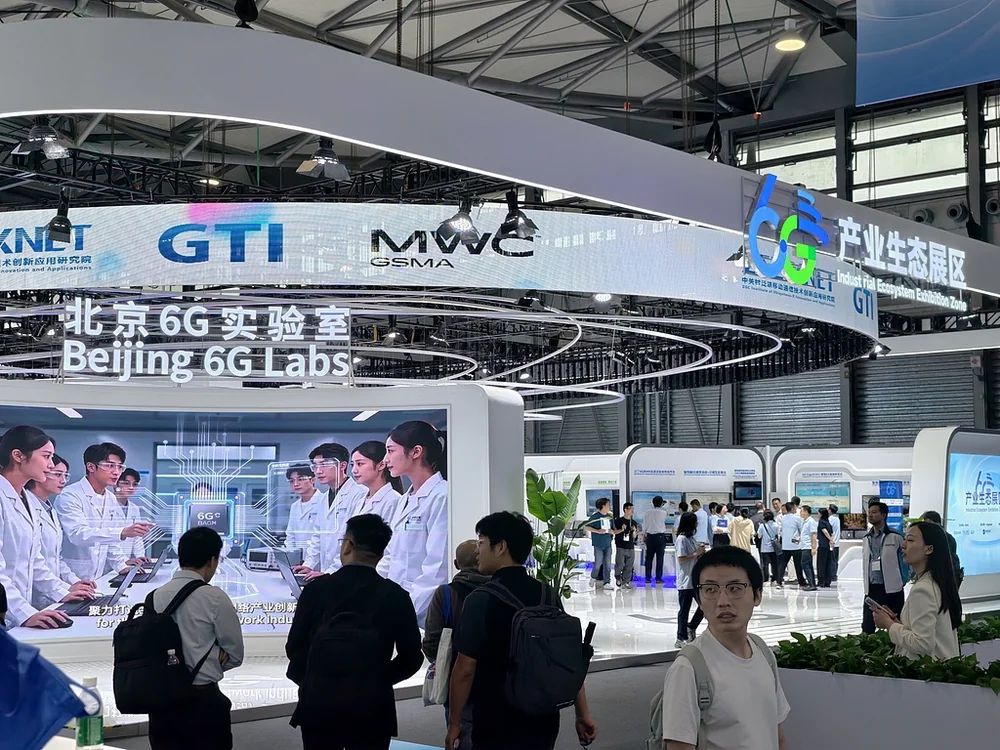
6G Enters Industry Preparation Phase, HK-listed Communication Chain May Benefit
From an industry evolution perspective, the peak of 5G construction has passed. Market attention is shifting to next-generation technology. The core of 6G is not only higher transmission rates but also the integration of "communication, sensing, computing, and intelligence," space-air-ground integrated networks, ultra-low latency, and broader industry connection capabilities. This means that unlike 4G and 5G, which were mainly driven by consumers, 6G is more likely to debut in industrial internet, connected vehicles, remote control, low-altitude economy, smart manufacturing, and other scenarios.
This change creates new investment clues for the HK-listed communication industry chain. First, communication equipment and network solution companies will benefit from sustained investment in standard setting, technology verification, and trial network construction. Second, although operators face slowing traditional business growth, in areas such as network upgrades, computing power network collaboration, industry private networks, and AI empowerment, they still have room to open new growth space. Third, companies involved in antennas, RF, optical modules, servers, edge computing, etc., may also gain order expectation increases in the 6G pre-research phase.
From a valuation perspective, HK-listed communication assets have long been in a low valuation range with stable cash flow and high dividend yields, combining defensive and growth attributes. If 6G-related investment gradually becomes clear, the pricing logic of "stable assets + technology flexibility" in capital markets is likely to strengthen.
Satellite Internet Cost Reduction Determines Commercialization Speed
Compared with the medium-to-long-term technology roadmap of 6G, the practical progress of satellite internet has more "industry disruptive power." In the past, satellite internet was limited by high launch costs, expensive terminals, long constellation deployment cycles, etc., making it difficult to popularize on a large scale. But as reusable rockets, batch satellite manufacturing, localized supply chains, and ground terminal cost reduction technologies mature, the industry is moving from "high-cost trial" to "operable business model."
The significance of cost reduction is reflected in three aspects. First, the barrier to constellation deployment is lowered, allowing more enterprises and capital to participate in the global low-orbit network competition. Second, after terminal prices decline, penetration rates in remote areas, maritime communications, emergency communications, and vehicle/ship scenarios can increase. Third, if synergized with 5G and 6G, satellite internet will transform from a supplementary network to an important part of infrastructure.
For the HK market, the investment mapping of satellite internet is not limited to satellite manufacturing itself but also includes aerospace materials, communication modules, terminal equipment, ground station construction, and related software services. Some hard-tech HK-listed companies, while their profit contributions are not yet fully released, are being reevaluated by the market for their strategic value in domestic substitution, supply chain security, and global layout. More importantly, cost reduction means the commercialization inflection point may arrive earlier, significantly improving investors' judgment of industry certainty.
HK-listed Technology and Communication Sectors: From Thematic Trading to Performance Verification
Hong Kong stocks have always been sensitive to global liquidity, tech narratives, and risk appetite, so 6G and satellite internet related themes can easily form periodic trends. But in the medium to long term, what truly determines the height of the sector is performance delivery ability and order conversion efficiency.
Currently, HK-listed technology and communication sectors present three types of opportunities:
1. Companies with Technology Barriers in Equipment and Components
These companies are usually deeply involved in RF, optical communication, precision manufacturing, satellite payloads, chip modules, etc., benefiting from industry upgrades and domestic substitution. Their advantages are high technical thresholds and strong customer stickiness. Once they enter the supply chain of the new generation communication system, their growth potential is large.
2. Operators and Network Infrastructure Companies
Large operators and infrastructure companies in HK have stable cash flows, low valuations, and competitive dividend yields. In the layout stage of 6G and space-air-ground integrated networks, such companies can improve earnings quality through capital expenditure optimization, industry private network expansion, and computing power synergy.
3. Application-oriented Companies Focusing on Scenario Implementation
In the future, the real breakthrough companies may not be those telling the earliest tech stories but those that can land 6G and satellite internet into actual scenarios. Fields such as low-altitude communications, maritime communications, intelligent transportation, industrial control, and emergency support may all give birth to new business models.
Risks and Pace: Thematic Opportunities Require Patience
It should be noted that these tracks are still in the intermediate stage from concept verification to industrialization. The market may trade more on expectations than profits in the short term. When seizing opportunities, HK investors should focus on the following risks:
First, technology routes are not fully unified; 6G standards and satellite internet architectures still have room for evolution. Second, the capital expenditure cycle may lengthen, pressuring short-term profits. Third, global tech competition and geopolitical factors may affect supply chains and market expansion. Fourth, the sector is highly volatile, often exhibiting "news-driven, sentiment-first" characteristics.
Therefore, a more prudent strategy is to screen targets using the triple criteria of "industry trend + valuation safety margin + performance delivery," avoiding pure thematic chasing. For high-risk-tolerant investors, growth companies with technical reserves and order catalysts can be moderately considered. For relative conservative investors, focus can be on leading assets with good cash flow, stable dividends, and long-term layout value.
Conclusion
Overall, 6G moving from concept to deployment and satellite internet cost reduction provide new structural opportunities for related HK-listed sectors. Unlike past reliance on policy expectations or sentiment, this round of market movement emphasizes actual industry progress and commercialization path verification. The Hong Kong stock market has unique advantages in valuation, internationalization, and industry coverage. Communication equipment, operators, hard-tech components, and related application companies are expected to gradually receive capital repricing over time.
At the current juncture, investors should focus on: who can truly enter the core supply chain of the next-generation communication infrastructure, who can seize the lead in satellite internet cost reduction, and who can convert technological advantages into sustainable revenue and profit. As industry certainty strengthens, relevant HK-listed targets may move from "theme-driven" to a new phase of "value revaluation."